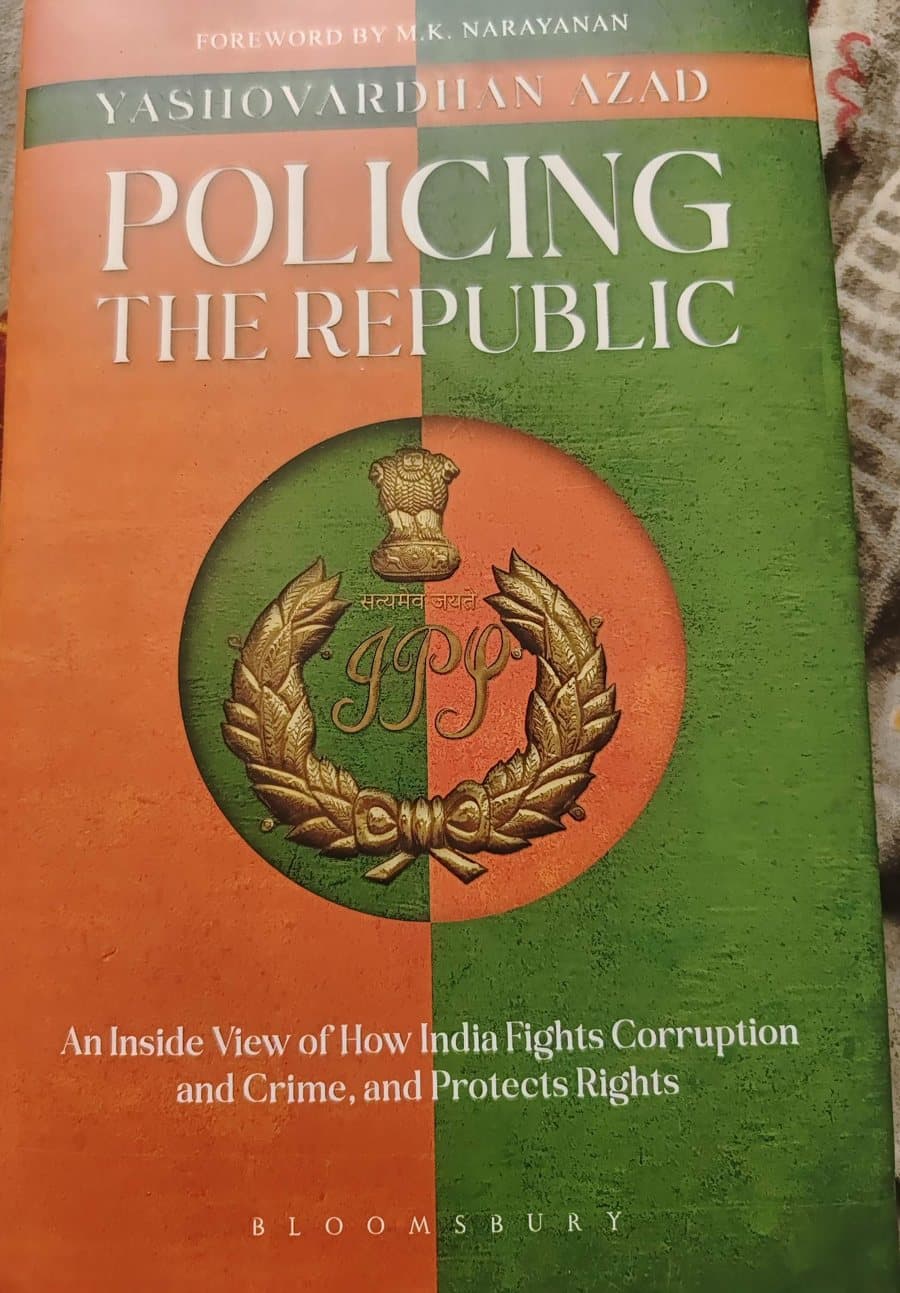
Policing the Republic
An Inside View of How India Fights Corruption and Crime, and Protects Rights
Foreword by M.K. Narayanan
Bloomsbury · Policing & Justice
★★★★★ 5.0 (1 review)
Yashovardhan Azad joined the Indian Police Service in 1976 and went on to serve as Special Director of the Intelligence Bureau and later as Secretary (Security) in the Cabinet Secretariat. In this book he turns that long experience on a question that sits at the heart of Indian democracy: how should a republic police itself?
Rather than telling tales of intelligence operations, Azad examines the structures that shape policing and governance. He writes about political interference, corruption, the criminalisation of politics, and the fragile machinery of investigation, and about the gap between the ideals of the Constitution and the realities of administration.
His argument is that these are symptoms of institutions in need of deep and sustained reform. The remedies he offers are measured rather than dramatic: professionalism, accountability and real institutional independence.
With a foreword by former National Security Adviser M.K. Narayanan, the book is written in clear prose and will interest policymakers, civil servants and students of public administration, as well as any citizen who wants to understand how the system works from the inside.
About the author: Yashovardhan Azad
Have you read this book? Share your honest review and help other readers discover it. Reviews are published after approval by the Stated team.
★★★★★ 5.0 · 1 review
Policing the Republic by Yashovardhan Jha Azad offers a compelling examination of the challenges facing India's policing and governance institutions. From political corruption and police reforms to cybercrime, national security and individual rights, the book explores issues that directly affect public trust and the functioning of a republic. Particularly relevant is its discussion of emerging cybercrime and the need for law enforcement to adapt to rapidly evolving threats. The book also raises important questions about institutional accountability, professional integrity and the balance between security and individual liberty. A valuable read for students, public servants and anyone interested in understanding the complexities of policing and democratic governance in India.
Neha kumbhar · 28 Oct 2026