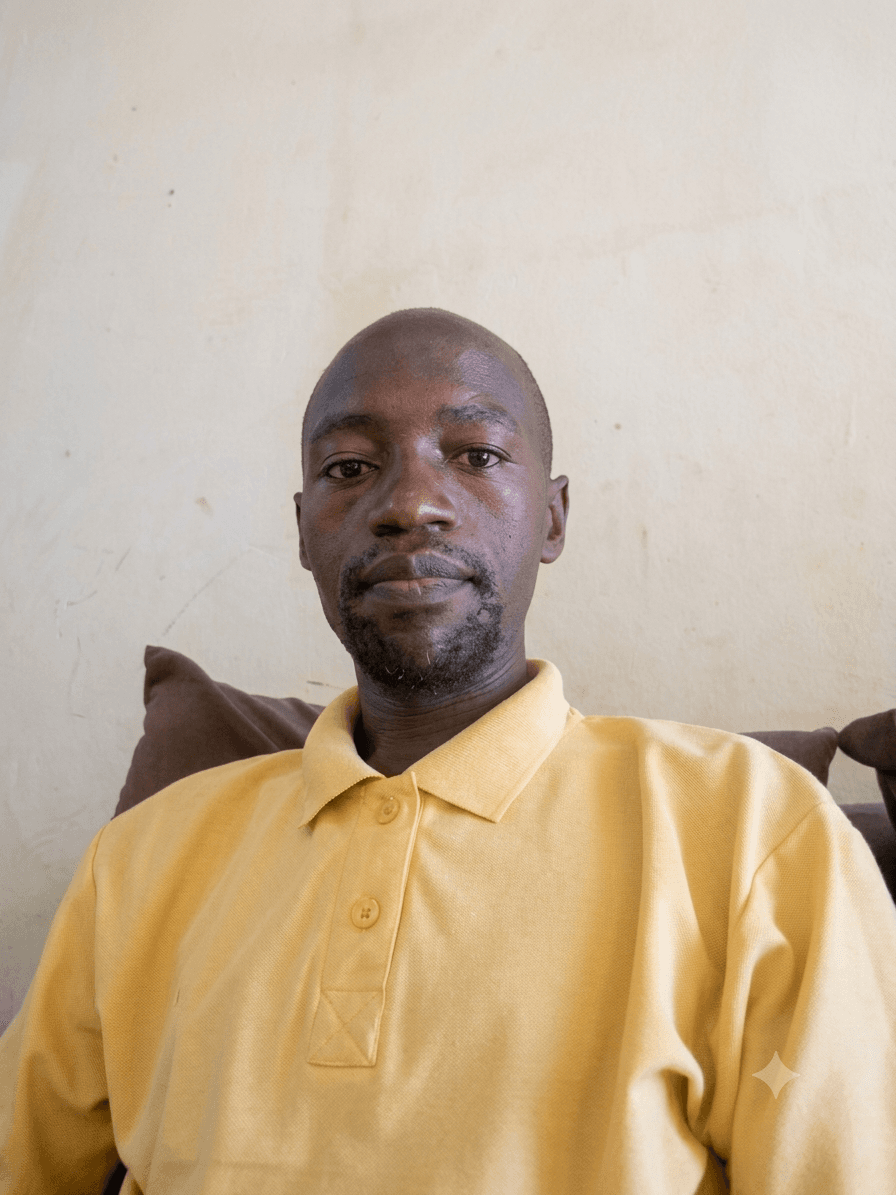
Deacon Kennedy Sserugo

Deacon Kennedy Sserugo · Founder, Kennedy Development Foundation & Pad Aid Uganda

Stated Principles · Issue No. 004

Deacon Kennedy Sserugo

Ending Period Poverty, One Girl at a Time

Founder, Kennedy Development Foundation (KDF) & Pad Aid Uganda (PAU) · Website (opens in new window)

“Everything spoken of being wrong should be formalized for the masses to learn.”

Format

Leadership Principles

Read time

8 minutes

Principles

6 stated

Published

July 2026

Community BuilderFounder, KDF & PAUPeriod Poverty AdvocateChild ProtectionYouth DevelopmentPalliative Care

About this feature

“We asked Deacon Kennedy Sserugo six questions. He gave us a decade of answers — from teaching ABCs to breaking the silence on menstruation.”

Deacon Kennedy Sserugo founded the Kennedy Development Foundation (KDF) in 2016, and in 2024 launched Pad Aid Uganda (PAU) to focus on Water, Sanitation and Hygiene (WASH) and Sexual and Reproductive Health and Rights (SRHR) programs. His work spans rescuing trafficking survivors, ending period poverty across Uganda's primary schools, reaching female inmates with menstrual health support, and running a Skilling Center offering TVET courses to out-of-school youth. His End Period Poverty/Shame initiative was named Best Action of the Month for January 2025 by the Swiss-based One Million Youth Action Challenge (1MYAC).

What follows is not a Q&A. It is a record of what he stands for, stated publicly, in his own words. This is how Stated Principles works: the person states their beliefs. We make them visible. You decide what to carry forward.

Six principles · Stated by Deacon Kennedy Sserugo

What he stands for — in his own words.

01 of 06

Stand With the One in Need

The fact that the world is full of conflicts, life imbalances, and a few concerned persons made me stand out. And yet, looking at all this, everything targets the woman and child, more so the girl child.

— Deacon Kennedy Sserugo, stated directly

What this means

He traces his life's work back to a simple observation: in a world full of conflict and imbalance, it's women and children — especially the girl child — who bear the weight of it. That observation became a calling.

Why it matters

Most missions start with a grievance or an ambition. His started with noticing who was left carrying the imbalance, and deciding to stand there instead of looking away.

Reflect on this

Where have you noticed an imbalance that everyone accepts as normal, simply because no one is standing there to challenge it?

Create a Commitment inspired by this

02 of 06

Understand Life, Then Empathize, Then Serve

Stephen King's principle — get busy living, or get busy dying — has always given me sleepless nights. Along with that, I've always observed: first, understanding the reality of life. After understanding life deeply, then empathy comes in. Then, serving with integrity. And lastly, adaptability.

— Deacon Kennedy Sserugo, stated directly

What this means

He lays out a deliberate sequence, not a list to pick from — understanding comes before empathy, empathy before service, and adaptability holds the whole thing together when circumstances change. Skip a step, and the ones after it don't hold.

Why it matters

It's easy to lead with good intentions and skip straight to "serving." His order insists that real service is built on first understanding the reality someone is actually living in — not the reality you assume they're living in.

Reflect on this

The next time you want to help someone, which step are you tempted to skip — understanding their reality, or genuine empathy — on the way to just doing something?

Create a Commitment inspired by this

03 of 06

From Teaching ABCs to Breaking the Silence on Menstruation

My work spans from teaching ABC to the most feared subject: menstruation. Kennedy Development Foundation (KDF) was birthed in 2016. In 2024, KDF birthed Pad Aid Uganda (PAU), specifically for Water, Sanitation and Hygiene (WASH), and Sexual and Reproductive Health and Rights (SRHR) programs.

In 2022, KDF rescued two teenage girls from child traffickers.

In 2024, KDF with PAU launched efforts to end period poverty in Uganda's primary schools. Ten primary schools and two NGOs were reached with sanitary pads and menstrual health education (MHE). A total of over 1,000 girls and boys were impacted. As a result, the efforts were recognized by a Swiss organization, One Million Youth Action Challenge (1MYAC) — our End Period Poverty/Shame initiative was named the Best Action of the Month for January 2025 by 1MYAC, and a blog about it was published on the 1MYAC website.

In 2025, PAU, through its project Mitigation of Period Poverty Among Female Inmates, reached 50 female inmates in Sembabule District Central Prison with its services.

Also in 2025, KDF opened a Skilling Center as part of its youth development work, offering TVET courses to youth who are out of school.

My community service has also opened international doors for me. I am happy — though not proud — to be affiliated with sound international organizations, and it's still going on.

— Deacon Kennedy Sserugo, stated directly

What this means

He deliberately calls menstruation "the most feared subject" — naming, directly, the silence his work has had to push against. From that starting point, KDF and PAU grew into rescue work, WASH and SRHR programs, prison outreach, and vocational skilling — each one a response to a gap he saw.

Why it matters

The phrase "happy, though not proud" is worth sitting with. He separates satisfaction in the work from ego about it — recognition became a byproduct of the mission, not the point of it.

Reflect on this

Is there a subject in your own community that's treated as too awkward or too feared to talk about openly — one that's quietly costing people because of the silence around it?
Create a Commitment inspired by this

04 of 06

Naming What's Wrongly Called Wrong, and What's Wrongly Called Right

First: stereotypes — things believed to be wrong, bad, or disgusting, yet in reality they are not. A good example is menstruation.

Second is the opposite of the first: things taken to be right, yet in reality they're wrong. A good example is war — a common game played by superpowers.

Third: climate change. Millions of people around the world practice agriculture, but because of unbalanced weather, almost all their hard work ends up in outcries.

Fourth: food insecurity. My grandparents never rode or drove — they were simple, ordinary people. But because they had enough food, they lived a good life, beyond everyone's expectations.

Fifth: disease.

On how individuals can contribute to lasting positive change: like the ancient writers, everyone should stand with the one in need. Everything spoken of as wrong should be formalized for the masses to learn. Everyone must engage in the food production process. And regarding war — like the ancient writers, everyone should make peace with their neighbor.

— Deacon Kennedy Sserugo, stated directly

What this means

He splits the world's biggest problems into two uncomfortable categories: things we've wrongly stigmatized (like menstruation), and things we've wrongly normalized (like war) — alongside climate change, food insecurity, and disease as the practical crises layered on top.

Why it matters

His answer for what to do about it stays grounded rather than abstract: stand with whoever needs it, teach openly instead of staying silent, grow food instead of just consuming it, and make peace with the neighbor in front of you rather than waiting for peace at a global scale.

Reflect on this

Which of his five — stereotypes, normalized wrongs, climate change, food insecurity, or disease — shows up most directly in your own community, and what's one honest thing you could do about it this year?

Create a Commitment inspired by this

05 of 06

Love, Confidence, Character

Love: love does everything, and it also avoids everything. "Wisdom tells me I am nothing. Love tells me I am everything. Between the two, my life flows." — Nisargadatta Maharaj

Confidence: for purposes of self-expression and facing new challenges, a youth must embrace confidence.

Character: this shapes one's actions and choices. It also helps one live a peaceful life.

— Deacon Kennedy Sserugo, stated directly

What this means

Asked for three guiding principles he'd give every young person, he chose love, confidence, and character — one about how you relate to others, one about how you carry yourself, and one about who you are when no one's watching.

Why it matters

None of the three are achievements — they're daily practices. That's consistent with everything else he's stated: the work is in the doing, repeated, not in arriving somewhere and being done.

Reflect on this

Of the three — love, confidence, character — which one do you most need to practice deliberately right now, rather than assume you already have?

Create a Commitment inspired by this

06 of 06

Building the Infrastructure of Dignity

We target infrastructure development. We shall put in place schools, hospitals, rehabilitation centers, and safe spaces for children, women and youths. The efforts will eradicate poverty, illiteracy, gender-based violence, mental health illnesses, premature deaths, school dropout, unemployment, uninformed choices, malnutrition, gender discrimination, teenage motherhood, juvenile crime, child trafficking, economic disparity, and period poverty and shame.

— Deacon Kennedy Sserugo, stated directly

What this means

Asked about legacy, he answers in concrete structures, not abstractions — schools, hospitals, rehab centers, safe spaces. The long list of what those structures are meant to address is the honest scale of what he's taken on.

Why it matters

A legacy stated as buildings and services, rather than as a name or an award, is a legacy that can be checked — did the school get built, did the girls stay in school, did the shame around periods lift. That's accountability built into the vision itself.

Reflect on this

If your own legacy had to be measured in something concrete — a place, a service, a structure that outlasts you — what would you want it to be?

Create a Commitment inspired by this

“Wisdom tells me I am nothing.
Love tells me I am everything.

Deacon Kennedy Sserugo — Principle V, Stated

Key takeaways

Six ideas worth carrying forward

  1. 1

    Notice who's carrying the imbalance, then stand there. His mission began with noticing that the world's conflicts land hardest on women and the girl child — and choosing not to look away.

  2. 2

    Understand before you empathize; empathize before you serve. Service without first understanding someone's actual reality is service aimed at the wrong problem.

  3. 3

    Name the silence, then break it. Calling menstruation "the most feared subject" was the first step to building programs that address it directly.

  4. 4

    Separate what's wrongly stigmatized from what's wrongly normalized. Some things treated as shameful aren't. Some things treated as acceptable — like war — are. Telling the two apart is the starting point for change.

  5. 5

    Love, confidence, and character are daily practices, not destinations. The three things he'd hand to every young person are things you keep choosing, not things you eventually finish acquiring.

  6. 6

    Measure legacy in structures you can point to. Schools, hospitals, rehab centers, safe spaces — a legacy stated concretely is a legacy that can be held accountable.

Which principle resonates with you?

Post a commitment inspired by Deacon Kennedy Sserugo's principles. State it publicly — and make it real.

Create a Commitment

Share this feature

8 min read · 6 principles

app.stated.in/principles/deacon-kennedy-sserugo

All Stated Principles features