01 of 10
Leadership Is Earned Through Competence, Character, Courage and Trust
Looking back, I believe I was shaped less by any single appointment or achievement than by the cumulative influence of people, places and experiences throughout my military journey. The Army taught me that leadership is not conferred by rank alone; it is earned through competence, character, courage and the trust of those one is privileged to command.
As a young officer, I learned the importance of leading from the front and by setting personal example. In difficult situations, soldiers looked to their officers not merely for instructions, but for confidence, clarity and reassurance. This taught me to accept responsibility, remain composed under pressure and never ask my men to undertake a task that I was unwilling to undertake myself. Over time, I understood that courage is not the absence of fear. It is the ability to act correctly despite fear, uncertainty and personal risk, as there were issues more important than fear.
My multiple tenures in Kashmir profoundly influenced me. The operational environment demanded alertness, resilience and decisive action, but it also taught me that military success cannot be measured only by operational outcomes. Every decision affects human lives, families and communities. I therefore came to appreciate the importance of restraint, compassion, empathy, dignity and respect for the people among whom we operate. Humanity is not separate from professional military conduct; it is one of its essential foundations.
The soldiers I commanded were actually the biggest source of learning. Their courage, loyalty, humour and capacity to endure hardship continually humbled and inspired me. Their families also reminded me that behind every soldier stands a network of sacrifice and silent strength. I learned that comradeship is built through shared hardship, mutual trust and the conviction that no one will be abandoned.
My progression from a young officer to Major General was therefore a journey of continuous learning, perseverance and determination. It taught me to listen and understand before deciding, to distinguish firmness from harshness, and to combine mission accomplishment with genuine concern for people, with empathy. I carry forward the belief that the finest leaders create confidence, develop others and leave behind institutions and individuals stronger than they found them.
If I were to identify the central lesson of my life, it would be this: leadership is ultimately a moral responsibility. It is about using authority with humility, making difficult decisions with humanity and remaining accountable for their consequences. That is the perspective I hope to share with members of the Armed Forces, young people and future generations.
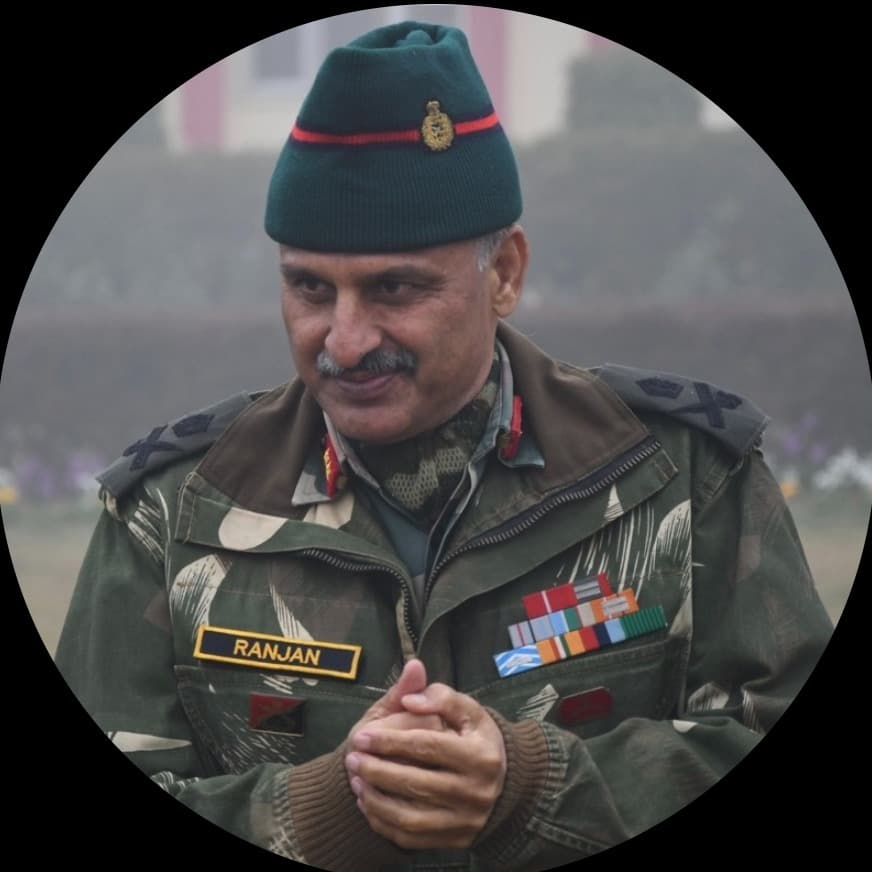
— Maj Gen Ranjan Mahajan, stated directly
What this means
Asked what most fundamentally shaped him, he doesn't point to a single defining moment but to a cumulative influence, people, places, and experiences across an entire career, with rank explicitly named as the wrong place to look for the source of real leadership.
Why it matters
"The soldiers I commanded were actually the biggest source of learning" reverses the usual direction of a leadership narrative. He credits the people below him in rank with teaching him the most, not the other way around.
Reflect on this
Who in your own life, below you in title or seniority, has actually taught you the most about how to lead?