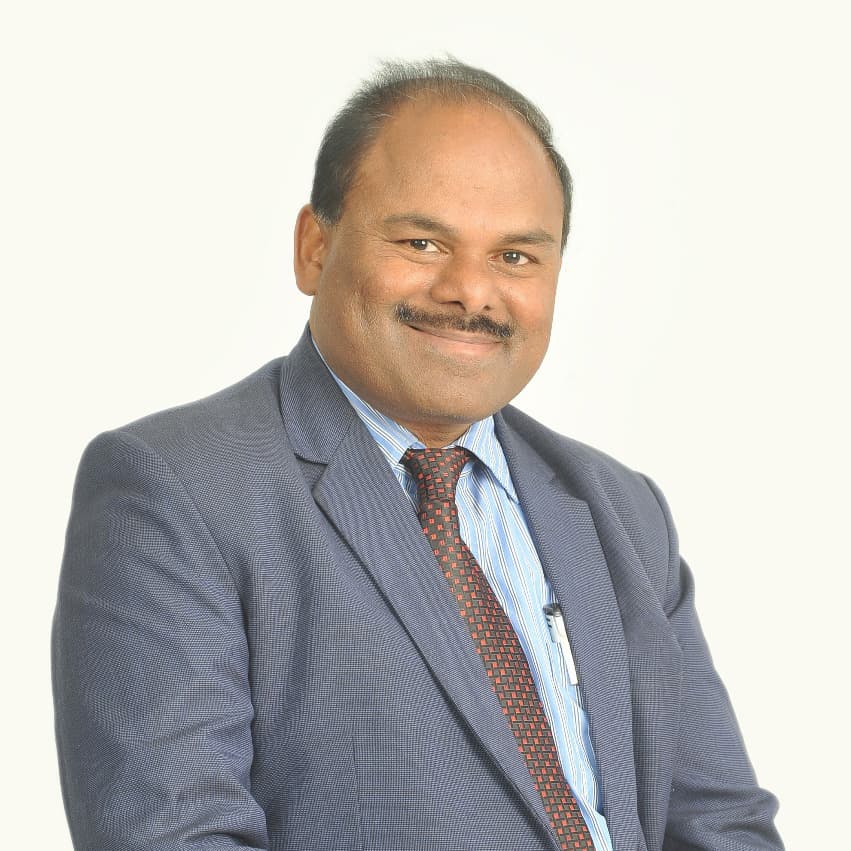
Prof. Dr. Ravinder Rena, B.A.(Econ), B.Ed., LL.B., M.A., M.Phil., Ph.D.(Econ), Gold Medallist · Professor of Economics, DUT Business School, Durban University of Technology, South Africa
Stated Principles · Issue No. 022
Prof. Dr. Ravinder Rena
The True Measure of a Life Is Not What We Accumulate, but What We Give Back
Associate Editor, The Bottom Line (Q1 Scopus & WoS) · Founding Editor-in-Chief, International Journal of Education Economics and Development (2009–2016) · Associate Editor, African Journal of Science, Technology, Innovation and Development (2016–2021)
“We asked Prof. Dr. Ravinder Rena fifteen questions, and one final reflection. He answered from a career spanning economics research, higher education leadership, and public policy across Africa and South Asia.”
Prof. Dr. Ravinder Rena is Professor of Economics at the DUT Business School, Faculty of Management Sciences, Durban University of Technology, South Africa. He holds a Ph.D.(Econ) as a Gold Medallist, alongside degrees in Economics, Education, and Law. He serves as Associate Editor of The Bottom Line (Q1 Scopus and Web of Science), was Founding Editor-in-Chief of the International Journal of Education Economics and Development from 2009 to 2016, and served as Associate Editor of the African Journal of Science, Technology, Innovation and Development from 2016 to 2021. His work spans economic development, inclusive growth, higher education governance, and mentorship of early-career researchers.
What follows is not a Q&A. It is a record of what he stands for, stated publicly, in his own words. This is how Stated Principles works: the person states their beliefs. We make them visible. You decide what to carry forward.
Sixteen principles · Stated by Prof. Dr. Ravinder Rena
What he stands for — in his own words.
01 of 16
Titles and Status Are Fleeting; the Difference We Make Endures
Throughout my journey as an academic, researcher, and public servant, I have come to understand that true leadership is defined not by the authority one holds, but by the positive difference one makes in the lives of others.
Early in my career, I believed that success was measured through titles, publications, or recognition. Over time, however, I realised that genuine fulfilment comes from empowering others, whether by mentoring young researchers, shaping inclusive policies, or contributing to community development.
My guiding principle has always been that knowledge must serve humanity. Whether through my academic work in economics and development studies or through my engagement with government and civil society, I strive to bridge theory and practice for social good.
I also believe strongly in humility and continuous learning. No matter how many years of experience one gains, there is always more to learn from others, especially from the communities we aim to serve.
Finally, integrity and consistency in values, both personal and professional, have remained the cornerstone of my journey. Titles and positions are fleeting, but the values we uphold and the difference we make in people's lives endure far beyond any professional milestone.
— Prof. Dr. Ravinder Rena, stated directly
What this means
He describes a real shift in how he measured success, from titles, publications, and recognition early on, to genuine fulfilment found in empowering others, whether through mentoring, policy work, or community development.
Why it matters
"Titles and positions are fleeting, but the values we uphold and the difference we make in people's lives endure" places the emphasis on what actually outlasts a career, not the markers most academic and professional paths are built to chase.
Reflect on this
Are you currently measuring your own success by titles and recognition, or by the difference you're actually making in someone else's life?
02 of 16
True Leadership Is Defined by Service, Not Authority
Leadership, to me, is fundamentally about service, empathy and vision. Having worked across academic, governmental and community sectors, I have learned that effective leadership requires listening more than instructing.
A good leader must understand the aspirations and struggles of those they serve, and must create pathways for collaboration rather than control.
I also believe that leadership demands moral courage, the willingness to make difficult decisions that align with ethical principles, even when they are unpopular. Transparency and accountability are indispensable, particularly in public and academic institutions where trust must be earned continuously.
Equally important is the capacity to inspire hope and confidence in others, especially the youth, who represent the future of any nation or institution. My leadership philosophy is therefore rooted in the idea that true leadership is not defined by authority, but by the ability to uplift others and create sustainable, positive change.
— Prof. Dr. Ravinder Rena, stated directly
What this means
He treats listening as a leadership skill that has to come before instructing, not a courtesy performed after decisions are already made, requiring genuine understanding of the aspirations and struggles of the people being led.
Why it matters
Naming moral courage specifically as the willingness to make unpopular but ethically aligned decisions distinguishes real leadership from simply being liked or avoiding controversy, a harder and less comfortable standard.
Reflect on this
Think of your last unpopular decision. Did you make it because it was ethically right, or did you avoid it because it would cost you support?
03 of 16
Education Is the Progressive Discovery of the Human Being
I strongly believe that education is not merely the transmission of information, but the progressive discovery of the human being. This is a principle I have consistently emphasised throughout my academic career, particularly through my work in economics education and human capital development.
Education should nurture critical thinking, ethical awareness and social responsibility, alongside technical competence. It must empower individuals to become active contributors to society, not passive recipients of knowledge.
I have often highlighted the importance of contextualising education to address real-world challenges such as poverty, inequality and sustainable development. My philosophy is that education, when combined with empathy and purpose, becomes a transformative force capable of shaping both individuals and societies for the better.
— Prof. Dr. Ravinder Rena, stated directly
What this means
He deliberately expands the definition of education beyond information transfer, treating critical thinking, ethical awareness, and social responsibility as equally essential outcomes alongside technical competence, not optional additions to it.
Why it matters
Insisting that education be contextualised to real-world challenges like poverty and inequality, rather than taught in the abstract, ties his academic philosophy directly to the development work that runs through the rest of his answers.
Reflect on this
In your own learning, or in how you teach or mentor others, is critical thinking and ethical awareness treated as central, or as something secondary to technical competence?
04 of 16
When Economics Centers on Human Dignity, Growth Numbers Become Real Welfare
My work in economics is driven by the conviction that economic policies must ultimately serve human welfare and dignity. I have spent much of my career studying how developing economies, particularly in Africa and Asia, can achieve inclusive and sustainable growth.
I firmly believe that economic growth should not be measured solely by GDP figures, but by improvements in people's quality of life, access to education, healthcare and employment opportunities.
My research has often focused on structural transformation, informal sector development and regional integration as pathways to reducing poverty and inequality. I also advocate strongly for evidence-based policymaking that incorporates the voices of marginalised communities.
Ultimately, I see economics as a tool for social justice, one that must be applied with compassion and rigour to create real, measurable improvements in people's lives.
— Prof. Dr. Ravinder Rena, stated directly
What this means
He rejects GDP alone as the measure of successful economic policy, replacing it with quality of life, access to education, healthcare, and employment, a shift from an abstract number to whether people's actual circumstances improved.
Why it matters
Advocating for evidence-based policymaking that specifically incorporates the voices of marginalised communities means the evidence itself has to include people usually left out of the data that shapes policy in the first place.
Reflect on this
In your own field, is success currently measured by an abstract number, or by whether it actually improved something concrete in people's lives?
05 of 16
Inclusive Growth Rests on Four Pillars
In my view, inclusive economic growth rests on four key pillars: equitable access to education and skills development, gender and social inclusion, sustainable use of resources, and strong institutional governance.
Education equips individuals with the tools to participate meaningfully in the economy, while gender and social inclusion ensure that growth benefits reach all segments of society, not just a privileged few.
Sustainability ensures that development today does not compromise future generations, and good governance guarantees transparency, accountability and efficient use of resources.
My research and policy engagements have consistently emphasised these interconnected pillars as essential for building resilient, inclusive economies, particularly in developing regions such as Sub-Saharan Africa and South Asia.
— Prof. Dr. Ravinder Rena, stated directly
What this means
He gives inclusive growth a precise structure, four named pillars rather than a vague call for fairness, each addressing a distinct failure mode: exclusion from skills, exclusion by gender or group, resource depletion, and weak governance.
Why it matters
Treating sustainability as ensuring "development today does not compromise future generations" ties environmental responsibility directly into economic inclusion, rather than positioning them as competing priorities.
Reflect on this
Of his four pillars, education access, gender and social inclusion, sustainability, and governance, which one is most neglected in the systems you're closest to?
“PhD does not merely denote a Doctor of Philosophy.”
Prof. Dr. Ravinder Rena — Principle VIII, Stated
06 of 16
Economic Justice Is Not Granted; It Is Built Through Unity and Shared Purpose
Global economic dynamics are undergoing significant transformation, with shifting power balances between the Global North and Global South. I believe that developing nations must strengthen regional cooperation, enhance industrial capacity and invest in human capital to reduce dependency on traditional economic powers.
Initiatives such as intra-African trade, South-South cooperation and coalitions like BRICS+ can play pivotal roles in reshaping global economic governance to be more equitable.
At the same time, I emphasise that economic sovereignty must be paired with sound domestic policies, strong institutions and social investment, so that growth translates into meaningful improvements in citizens' lives. I remain a strong advocate for multilateralism grounded in fairness, transparency and mutual respect among all nations, both developed and developing.
True economic justice, in my view, is not simply granted by global institutions but is built through the unity, innovation and shared purpose of nations working together toward common prosperity.
— Prof. Dr. Ravinder Rena, stated directly
What this means
He pairs a call for developing nations to strengthen regional cooperation and reduce dependency with an explicit caveat: economic sovereignty only produces real benefit for citizens when it comes paired with sound domestic policy and strong institutions at home.
Why it matters
This is his own stated position on a genuinely contested area of international economic policy. He frames it as a call for fairer multilateralism rather than opposition to any specific country, but it engages directly with debates about global economic power that reasonable people weigh differently.
Reflect on this
Where do you see the balance between external cooperation and internal institutional strength playing out in your own country's or region's development?
07 of 16
Policy Is Not a Static Document; It Is a Living Commitment to Human Welfare
Public policy, to be effective, must be dynamic, evidence-based and responsive to the needs of the population it serves. I have always advocated for policies that are inclusive, participatory and grounded in rigorous research.
One of my core principles is that policy formulation should involve continuous consultation with stakeholders, including marginalised and vulnerable groups, to ensure that interventions address actual needs rather than assumed ones.
I also stress the importance of monitoring and evaluation frameworks to track policy outcomes and make necessary adjustments over time. Furthermore, I believe that policies must balance short-term economic objectives with long-term social and environmental sustainability.
In essence, effective policy design requires humility, flexibility and a genuine commitment to improving human welfare, recognising that policy is not a static document but a living framework that must evolve with society's changing needs.
— Prof. Dr. Ravinder Rena, stated directly
What this means
He specifically names monitoring and evaluation frameworks as essential, treating policy as something that must be tracked and adjusted over time rather than written once and assumed to work as intended indefinitely.
Why it matters
Insisting policy address "actual needs rather than assumed ones" through continuous consultation with marginalised groups directly challenges policymaking that relies on assumptions about what people need rather than asking them.
Reflect on this
Is there a policy or plan in your own organisation that was designed once and never revisited, the way he warns against?
08 of 16
PhD Stands for Patience, Honesty, and Dedication
My doctoral journey was, without doubt, one of the most transformative experiences of my academic career. Beyond the acquisition of specialised knowledge in economics, it profoundly shaped my critical thinking, research rigour and analytical precision.
The process taught me the value of intellectual humility, recognising that knowledge is continuously evolving and that rigorous inquiry requires openness to new ideas and constructive criticism.
My doctoral experience also instilled in me a deep sense of perseverance and resilience, as academic research often involves navigating uncertainty, setbacks and the iterative process of refining ideas.
Moreover, it reinforced the importance of mentorship and collaboration, as I learned as much from my supervisors and peers as from my own independent research. This period cultivated in me the qualities of patience, precision and purpose that continue to define my professional and personal ethos.
As I often tell my own doctoral students today: PhD does not merely denote a Doctor of Philosophy; it also signifies Patience, Honesty and Dedication, three qualities that anchor genuine intellectual and personal growth throughout a scholar's life.
— Prof. Dr. Ravinder Rena, stated directly
What this means
He reframes the PhD acronym itself as a mnemonic for the character qualities the process actually demands, patience, honesty, and dedication, alongside its formal meaning as a Doctor of Philosophy.
Why it matters
Crediting mentorship and collaboration as sources of learning equal to his own independent research pushes back against a common myth of the solitary scholar, acknowledging that even doctoral-level work is built with others.
Reflect on this
In your own most demanding period of learning or growth, did you credit the people who taught and supported you as much as your own independent effort?
09 of 16
Academic Leaders Must Move Away From Top-Down Authoritarian Governance
Effective academic leadership requires a delicate balance between maintaining institutional standards and fostering an environment conducive to research, teaching and innovation.
I believe strongly in participatory governance, where faculty, staff and students are actively involved in decision-making processes, thereby cultivating a sense of ownership and accountability across the institution.
Encouraging interdisciplinary collaboration and open dialogue is also essential to break down silos and stimulate creative and critical thinking.
Additionally, I emphasise the need for transparent and merit-based systems for promotion, funding and resource allocation to maintain trust and motivation within the academic community.
In my view, academic institutions must continuously invest in capacity building, both for early-career scholars and established academics, to remain competitive, relevant and impactful in a rapidly evolving educational landscape. This requires a shift from top-down, authoritarian management styles toward more inclusive, participatory approaches, which, in my experience, cultivate innovation, resilience and long-term institutional excellence.
— Prof. Dr. Ravinder Rena, stated directly
What this means
He specifically names participatory governance, faculty, staff, and students actively involved in decisions, as the mechanism for building ownership and accountability, rather than treating institutional standards and inclusive process as competing priorities.
Why it matters
Calling directly for a shift away from top-down, authoritarian management styles is a specific institutional critique from someone with real standing inside academic administration, not an abstract preference for a friendlier workplace culture.
Reflect on this
In an institution or organisation you're part of, is decision-making genuinely participatory, or top-down with the appearance of consultation?
10 of 16
Young Researchers Are Our Most Valuable Resource for Sustainable Progress
Mentorship has always been at the heart of my academic and professional practice. I firmly believe that guiding young researchers, students and early-career professionals is not just a duty but a moral responsibility, one that ensures the continuity and advancement of knowledge and societal progress.
Effective mentorship requires patience, active listening and the ability to tailor guidance to the unique needs, strengths and aspirations of each individual. I strive to create an environment where mentees feel safe to explore ideas, make mistakes and grow both intellectually and personally.
Beyond technical knowledge, I emphasise the development of critical thinking, ethical judgement and resilience, qualities that are essential for long-term success in research, policy or professional practice.
I also believe in leading by example, demonstrating integrity, discipline and a genuine passion for knowledge, which often inspires mentees more than instructions or theoretical guidance alone.
Ultimately, my mentorship philosophy centres on empowering individuals to become independent, confident and socially responsible contributors to their fields, recognising that investing in young talent is investing in the future of research, education and sustainable development.
— Prof. Dr. Ravinder Rena, stated directly
What this means
He calls mentorship "a moral responsibility" rather than an optional extra to a research career, tying it directly to the continuity of knowledge and societal progress, not just individual career development for the mentee.
Why it matters
Creating an environment where mentees "feel safe to explore ideas, make mistakes and grow" is a specific, practical standard that goes beyond simply transferring technical knowledge, addressing the psychological conditions that actually let learning happen.
Reflect on this
Do the people you mentor or supervise feel genuinely safe making mistakes in front of you, or do they perform certainty to avoid your judgment?
“Setbacks are not failures; they are opportunities to refine strategies.”
Prof. Dr. Ravinder Rena — Principle XIII, Stated
11 of 16
The Central Challenge Is to Build an Ecosystem Where Everyone Has a Genuine Opportunity
Entrepreneurship and innovation are critical drivers of economic development, particularly in emerging and developing economies. I believe that fostering a culture of entrepreneurship requires more than access to finance; it necessitates supportive policy frameworks, quality education and mentorship, as well as robust infrastructure.
My research has consistently highlighted that inclusive entrepreneurship, especially empowering women, youth and marginalised communities, has transformative potential to reduce poverty, generate employment and stimulate local economic growth.
I also emphasise the importance of innovation ecosystems that connect universities, industry and government, ensuring that knowledge translates into practical, scalable solutions. Moreover, I advocate for policies that reduce bureaucratic barriers and promote access to markets, technology and capital for small and medium enterprises.
In my view, the central challenge is not merely to create more entrepreneurs, but to build an ecosystem where everyone, regardless of gender, socioeconomic background or geographic location, has a genuine opportunity to innovate, grow and contribute to sustainable development.
— Prof. Dr. Ravinder Rena, stated directly
What this means
He reframes the entrepreneurship challenge away from simply producing more entrepreneurs, toward building the ecosystem, policy frameworks, education, mentorship, infrastructure, that determines who actually gets a genuine opportunity to try in the first place.
Why it matters
Naming women, youth, and marginalised communities specifically as groups with transformative potential when included treats inclusive entrepreneurship as an economic strategy, not only a matter of fairness.
Reflect on this
In your own community or field, is the barrier to entrepreneurship really a lack of entrepreneurs, or a lack of genuine access to the ecosystem that would let more people try?
12 of 16
Neither Growth at Any Cost, Nor Environmental Protection at the Expense of Human Development, Is the Right Goal
Balancing economic growth with environmental sustainability is one of the most pressing challenges of our time. I believe that neither growth at any cost, nor environmental protection at the expense of human development, is the right approach.
Instead, we must pursue a model of sustainable and inclusive growth that integrates environmental stewardship into economic planning from the outset.
This involves investing in renewable energy, promoting resource efficiency and encouraging sustainable agricultural practices, while simultaneously addressing poverty, unemployment and social inequality.
I also advocate for strong regulatory frameworks and incentives that encourage businesses and communities to adopt environmentally responsible practices without compromising economic opportunities. Ultimately, achieving this balance requires collaboration between governments, private sector actors and civil society, recognising that long-term prosperity is only possible when economic development and environmental sustainability are pursued together, rather than as competing objectives.
— Prof. Dr. Ravinder Rena, stated directly
What this means
He explicitly rejects both extremes, growth at any cost and environmental protection at the expense of human development, refusing to treat this as a binary choice and instead describing environmental stewardship as something integrated into economic planning from the start.
Why it matters
Insisting environmental and economic goals be "pursued together, rather than as competing objectives" pushes back on a framing that often forces communities and policymakers to choose one over the other.
Reflect on this
In your own decisions, do you currently treat sustainability and growth as genuinely compatible goals, or as a trade-off you're quietly choosing one side of?
13 of 16
Resilience Is the Capacity to Learn, Adapt, and Continue With Integrity
Throughout my career, I have encountered numerous challenges, ranging from navigating complex bureaucratic systems to managing large-scale research projects under constrained resources. One particularly formative experience was leading a multi-country research initiative during a period of significant political and economic instability.
Despite unforeseen obstacles, including funding delays and logistical challenges, we successfully completed the project by fostering strong collaboration, maintaining transparent communication and adapting our strategies to changing circumstances.
This experience taught me the importance of resilience, patience and problem-solving under pressure. I learned that setbacks are not failures but opportunities to refine strategies, strengthen partnerships and innovate solutions.
It also reinforced my belief in the power of teamwork and shared responsibility, as overcoming complex challenges is rarely achieved alone. Ultimately, this experience deepened my understanding that resilience is not simply the ability to recover from difficulties, but the capacity to learn, adapt and continue moving forward with integrity, even amid uncertainty.
— Prof. Dr. Ravinder Rena, stated directly
What this means
He offers a specific, real example, a multi-country research initiative during political and economic instability, rather than a general claim about resilience, grounding the principle in an actual test of funding delays and logistical breakdowns.
Why it matters
Redefining resilience as "the capacity to learn, adapt and continue moving forward with integrity," rather than simply the ability to recover, adds a standard that recovery alone doesn't guarantee, integrity maintained throughout the difficulty, not just survival of it.
Reflect on this
Think of your own hardest professional setback. Did you recover from it, or did you also maintain your integrity and keep learning throughout it, the way he distinguishes?
14 of 16
Integrity Builds Trust, Lifelong Learning Creates Progress, Service Gives Success Its Purpose
If I could offer three guiding principles to young professionals and future leaders, they would be: first, uphold integrity and ethical conduct in all endeavours, as trust and credibility are the foundation of any successful career or initiative.
Second, embrace lifelong learning and adaptability, recognising that knowledge and skills must continuously evolve to remain relevant in a rapidly changing world.
Third, prioritise service to others and social responsibility, understanding that true success is measured not only by personal achievement, but by the positive impact one has on communities, institutions and society at large.
These principles, in my experience, form the foundation for sustainable personal and professional growth, as well as meaningful contributions to society.
— Prof. Dr. Ravinder Rena, stated directly
What this means
Asked for three guiding principles to leave with young professionals, he gives integrity, lifelong learning, and service to others as a sequence, not a list of equal options, each building on the credibility and relevance the previous one establishes.
Why it matters
Defining true success as measured "not only by personal achievement, but by the positive impact one has" extends the same standard he's applied throughout, to policy, to mentorship, to entrepreneurship, down to the individual level of personal career success.
Reflect on this
Of his three, integrity, lifelong learning, service to others, which one would you say currently gets the least deliberate attention in your own life?
“Seek knowledge with humility, act with integrity, lead with compassion.”
Prof. Dr. Ravinder Rena — Principle XV, Stated
15 of 16
Build a Life of Purpose, Not Merely a Career of Success
If I could summarise a single message for the next generation, it would be this: seek knowledge with humility, act with integrity and lead with compassion.
The world is constantly evolving, presenting new challenges and opportunities, and it is essential to remain adaptable while staying true to core ethical principles. Education and professional achievement are important, but they must be complemented by empathy, social responsibility and a genuine commitment to the wellbeing of others.
I would encourage young people to embrace collaboration over competition, to value diverse perspectives and to recognise that meaningful impact often comes from collective effort rather than individual accolades.
Finally, I would remind them that resilience, patience and continuous learning are essential tools for navigating an uncertain and rapidly changing world. My hope is that they carry forward a sense of purpose that transcends personal gain, striving to create positive change for their communities, their countries and the world at large, ultimately building a life of purpose, not merely a career of success.
— Prof. Dr. Ravinder Rena, stated directly
What this means
His three-part summary message, seek knowledge with humility, act with integrity, lead with compassion, pairs each virtue with a specific action rather than leaving them as abstract qualities to admire.
Why it matters
The final distinction, "a life of purpose, not merely a career of success", is the same idea that opened his very first answer, that titles and status are fleeting, now offered forward to the next generation rather than only reflected on in his own life.
Reflect on this
By his own closing distinction, are you currently building a career of success, or a life of purpose? What would change if you were honest about the difference?
The True Measure of a Life Is Not What We Accumulate, but What We Give Back
As I reflect on my journey as an academic, researcher and policy advocate, I am reminded that the true measure of a life is not what we accumulate, but what we give back.
Every lecture delivered, every paper published, and every policy discussion I have contributed to carries the hope of empowering others and improving lives, whether through advancing knowledge, mentoring the next generation, or influencing more equitable and sustainable development.
I have learned that patience, humility and perseverance are indispensable, particularly when navigating complex challenges in research, governance or social development. Above all, I believe that our legacy is defined not by titles or accolades, but by the positive difference we make in the lives of others and the enduring values we instil in those who follow.
It is this conviction that continues to guide my work and inspires me to contribute meaningfully to society, both today and for future generations.
— Prof. Dr. Ravinder Rena, stated directly
What this means
Given the chance to add one final, unprompted reflection, he returns to the same measure that opened his very first answer, not accumulation but contribution, confirming it as the actual foundation the other fifteen principles were built on.
Why it matters
Naming lectures, papers, and policy discussions specifically as carrying "the hope of empowering others" ties his everyday professional output directly to the larger legacy he describes, rather than treating legacy as separate from the daily work itself.
Reflect on this
By his measure, not what you accumulate but what you give back, what would your own answer be right now if you were honest about it?
“The true measure of a life is not what we accumulate, but what we give back.”
Prof. Dr. Ravinder Rena — Principle XVI, Stated
Key takeaways
Seven ideas worth carrying forward
1
Titles and positions are fleeting; the difference you make in people's lives endures. Genuine fulfilment comes from empowering others, not from titles, publications, or recognition alone.
2
True leadership is defined by service, not authority. Listening must come before instructing. Moral courage means making unpopular decisions that align with ethical principles.
3
Economic growth should be measured by quality of life, not GDP alone. Access to education, healthcare, and employment are the real markers of whether growth is actually working.
4
PhD also stands for Patience, Honesty, and Dedication. Intellectual humility means recognising that knowledge is always evolving, and that rigorous inquiry requires openness to criticism.
5
Resilience is the capacity to learn, adapt, and continue with integrity. Not simply the ability to recover from setbacks, but to keep your integrity intact throughout the difficulty.
6
Uphold integrity, embrace lifelong learning, and prioritise service to others. In that order. Trust and credibility are the foundation everything else is built on.
7
The true measure of a life is not what we accumulate, but what we give back. Legacy is defined not by titles or accolades, but by the positive difference made in the lives of others.
Which principle resonates with you?
Post a commitment inspired by Prof. Dr. Ravinder Rena's principles. State it publicly — and make it real.